
Twenty Years Closer: HOPP, Cycle for Survival, and Precision Oncology Breakthroughs
Discover how 20 years of HOPP and Cycle for Survival have advanced rare cancer research, precision oncology, immunotherapy, and lifesaving treatments at MSK.

The Origins of Precision Oncology at MSK
In 2006, precision oncology — when doctors tailor treatment to the molecular features of a person’s cancer — was a promise but not yet a practice. Scientists had recently sequenced the full human genome, only a handful of cancer-driving mutations were known, and the first precision cancer drugs were just beginning to reveal the potential of this new approach to fighting cancer.
Memorial Sloan Kettering Cancer Center (MSK) was ready to lead this new field. We expanded our research facilities and founded programs to deepen our understanding of cancer genetics and speed the development of new drugs. The Human Oncology and Pathogenesis Program (HOPP) was the centerpiece of this effort — a hub for physician-scientists to study the cancers they treated each day and translate their insights into precision therapies for patients.
Less than a year later, MSK launched Cycle for Survival, a new movement to raise funds for rare cancer research, an area that had long been underfunded.
Over the next two decades, HOPP and Cycle for Survival would become inextricably linked — one program advancing the science of the disease, the other propelling it forward through an extraordinary community of supporters determined to beat rare cancers, together. From helping MSK make precision oncology a routine part of cancer care to backing pivotal clinical trials of new targeted drugs, Cycle for Survival has been the steady force behind some of HOPP’s most important breakthroughs.
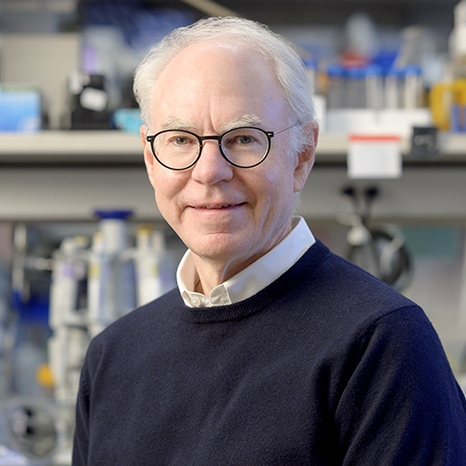
“It’s amazing what we’ve accomplished in partnership with Cycle for Survival,” says Charles Sawyers, MD, who joined MSK 20 years ago as the inaugural Chair of HOPP and Marie-Josée Kravis and Henry R. Kravis Chair in Human Oncology and Pathogenesis — and who still leads the program today. “It’s not just that we’re breaking new ground in cancer biology, it’s that we’re translating that work into treatments that change the lives of our patients and people with cancer around the world.”
From their early days as small programs driven by fiercely dedicated scientists and supporters, HOPP and Cycle for Survival have grown in tandem, extending their reach and impact across the full arc of cancer research and care. Five epic advances tell the story of what they have made possible.
Five breakthroughs fueled by 20 years of collaboration
1. Redefining cancer treatment and survival through molecular targeting
For most of cancer history, treatment was guided by where in the body a tumor began. HOPP scientists upended that model, focusing instead on the genetic changes that help cancer grow and spread and designing therapies to target them – laying the foundation for the burgeoning field of precision oncology.
This shift led to a wave of discoveries across a wide range of cancers. HOPP investigators identified mutations that fuel acute myeloid leukemia, breast, prostate, and thyroid cancers — findings that led to several FDA-approved precision therapies. They also helped crack one of oncology’s most persistent challenges as part of the team that developed the first drug that targets cancers with a KRAS mutation, one of the most common genetic alterations in pancreatic, lung, and colon cancers.
That wasn’t HOPP’s only first. Work supported by the Cycle for Survival community helped pave the way for the first new treatment for low-grade gliomas, a type of brain cancer, in decades, and the first-ever molecularly targeted therapy for these tumors.
These successes are reshaping what survival looks like, turning once-limited options into new possibilities for people around the world.
2. Bringing precision oncology into everyday patient care
Scientists’ understanding of cancer genetics surged in the early days of HOPP. But the systems needed to apply that knowledge to patient care did not yet exist. Philanthropy helped MSK build the infrastructure that made precision oncology a reality.
With support from Cycle for Survival, HOPP faculty developed MSK-IMPACT®, a targeted tumor-sequencing test that studies more than 500 genes to identify the changes driving each person’s cancer. After the founding of the Marie-Josée and Henry R. Kravis Center for Molecular Oncology in 2014, this approach became part of everyday care, making MSK the first center to offer comprehensive genomic profiling to every patient. More than 158,000 tumor samples have since been sequenced, creating one of the world’s richest resources for understanding cancer.
Today, HOPP’s efforts to put precision oncology into practice have come full circle. Its scientists laid the groundwork for routine tumor sequencing, and now insights from these tests flow back to HOPP to fuel the next generation of precision drugs and immunotherapies.
3. Understanding and overcoming drug resistance
As targeted drugs became a mainstay of cancer treatment, a new obstacle quickly emerged: resistance. Cancer is highly adaptable, and even when treatments work at first, the disease often evolves in ways that allow it to bypass the drug and grow again. Understanding resistance and finding ways to overcome it became one of the defining challenges of the field.
HOPP investigators were among the first to tackle this problem. They started with prostate cancer, developing drugs that could effectively treat tumors that had stopped responding to hormone therapy. Later, HOPP scientists uncovered the mutations that allow hormone-sensitive breast cancers to escape therapy and translated those findings into an FDA-approved drug. Thanks to Cycle for Survival and the MSK Giving community, the team also pioneered therapies to combat resistance in rare, difficult-to-treat blood cancers, including acute myeloid leukemia.
These advances changed how physicians and scientists think about precision treatment: not as a single strike but as an ongoing evolutionary battle. By anticipating resistance and designing therapies to outsmart it, HOPP researchers are extending the reach and durability of targeted drugs.
4. Harnessing the immune system to fight cancer
Mobilizing the immune system is one of the most powerful strategies in cancer treatment. But when HOPP was founded, immuno-oncology was a niche discipline, not the standalone field it is today.
Its rise was driven in part by discoveries made at HOPP, where scientists showed that interactions between tumors and immune cells could be measured, predicted, and used to guide treatment. Among their earliest breakthroughs was the finding that tumors with higher numbers of mutations are more likely to respond to immunotherapy, helping to explain why patients with certain cancers benefit dramatically while others do not.
Today, MSK scientists use MSK-IMPACT and other tools to identify the molecular features that make tumors vulnerable to checkpoint inhibitors and engineered T cell therapies, approaches that have revolutionized how we treat both rare and common cancers.
Years of work within HOPP also sparked the development of the first experimental vaccines aimed at preventing the recurrence of pancreatic cancer — an innovation made possible with support from Cycle for Survival. This effort quickly drew global attention and is now one of the most active and promising areas of immuno-oncology research and clinical trials at MSK.
5. Turning data into cures: Using genomic data to develop new cancer therapies
HOPP was founded on the belief that genomic data could do more than explain how cancer works: It could help guide new treatments and cures. By collecting and analyzing tumor genomic data at scale, HOPP scientists have steered the development of revolutionary precision therapies and established MSK as a world leader in cancer genomics.
Work that began with DNA sequencing now includes RNA, whole-genome, and single-cell analyses that are revealing new dimensions in cancer biology. At the same time, increasingly powerful computational tools allow HOPP researchers to extract deeper insight from data, shedding light on the factors that shape treatment response, resistance, relapse, and metastasis. Cycle for Survival has been a key partner in bringing these technologies to MSK.
Just as important, HOPP has helped ensure that what we learn is shared. Its faculty led the creation of global databases and publicly accessible tools that allow doctors and researchers around the world to interpret tumor genetics and make more informed treatment decisions — extending the impact of discoveries made at MSK to patients everywhere.
The Future of Rare Cancer Research at MSK
Launched at a time of extraordinary promise, HOPP and Cycle for Survival have grown over the past two decades through the power of collaboration, community, and an unwavering commitment to improving the lives of people with cancer. Together, they continue to turn possibility into progress, bringing us closer to realizing MSK’s mission of ending cancer for life.